
In South Africa it is impossible to talk about energy without including mining in the conversation. Especially as critical minerals are at the centre of driving the energy transition.
Join our WhatsApp channel for more updates on SA mining
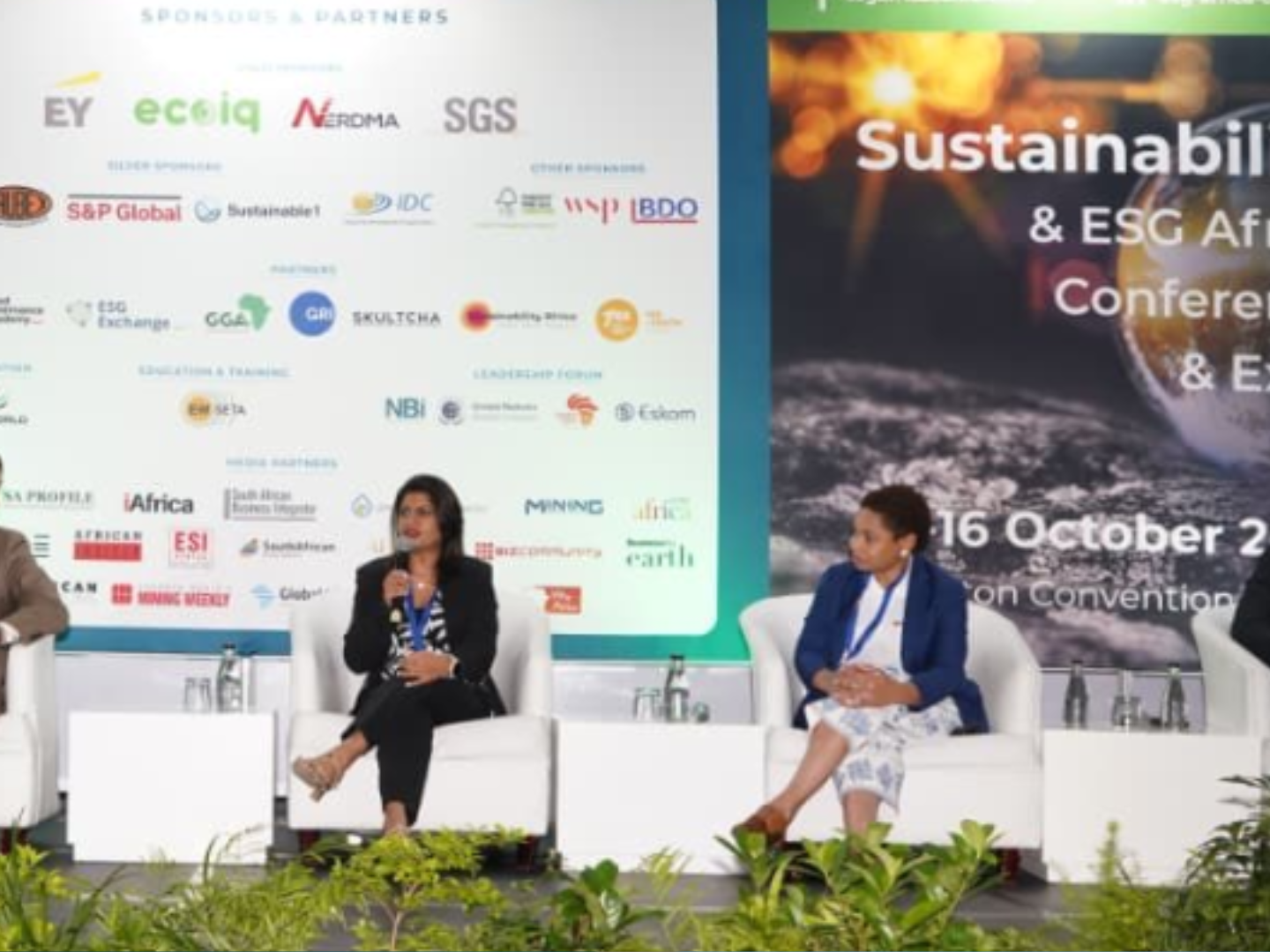
This was a shared sentiment among panel members of a breakaway session, titled Mining and Energy Transitions: From Extraction to Innovation, at the ESG Africa Conference, a sustainability and ESG conference and exhibition event held on 15-16 October at the Sandton Convention Centre.
“As an entity under the department of electricity and energy, we are tasked with doing research in the energy space and driving the energy efficiency and demand side management measures the country is currently implementing.
“We’re driving the energy transition for South Africa, and we just came out of the G20 energy transitions group discussions last week where this issue was topical, and we agreed that energy transition will definitely be driven by critical minerals,” said Titus Mathe, CEO of the South African National Energy Development Institute.
He added that government’s approach to get to net zero is through a low carbon intensive economy by 2050, with critical minerals contributing significantly, following a phased approach.
All energy technologies matter
Barry MacColl, senior regional manager for the Electric Power Research Institute (EPRI), said as a research organisation, EPRI researches all the energy technologies available to the market, with evidence showing that all of them play an important role.

“Our bedrock is independence and objectivity in the energy space, so we don’t pick technologies and don’t have any preferences. We don’t hold views like coal is bad and nuclear is good or renewables are better than hydro.
ALSO READ: The future of energy and mining in SA is low carbon, digital and local
“We review and research in great depth all the technologies, and have found that it’s not just the transition to clean electricity that is currently happening, as some parts of the world are still moving towards electricity, especially to power data centres.
“There’s still a lot of use of oil and gas and coal for heating by the end user out there. So this is actually a twin transition.”
He added that this transition brings in new technologies which are increasingly microprocessor and digital based. “So even if you have a wind farm or a battery or a smart metre, they all rely on microprocessor and digital technologies.”
Decarbonisation requires traditional and clean electricity
Gina Downes, senior consultant on climate change at Eskom, added that it is not surprising that in some quarters electricity demand was growing, as decarbonisation naturally requires both traditional and clean electricity.
“One thing we can be certain about is that there will be no danger of job losses in the electricity sector anytime soon. We are definitely growing and demand will grow for electricity. And the challenge is that we simply don’t have enough electricity.
“We experienced load shedding in the recent past but I’m glad we managed to get that under control. But what we really have to do is grow our electricity system, which is why we are eagerly awaiting the new integrated resource plan. This will essentially be a plan for growth because all sectors are going to need electricity.
“At the same time, we are going through an unbundling process and, with the Electricity Regulation Amendment Act, we’re also transitioning the structure of the electricity system and managing both these things at the same time is challenging.

“But at the end of the day, we will definitely get there. We’ve already made great progress with the independent system operator, the National Transmission Company of South Africa, allowing a lot more competition into the market as long as the frameworks are correct and the risks are correctly shared and the costs correctly allocated.”
Oil and gas play critical role in energy mix
Board member at the South African National Energy Association Dineo Tlou said the oil and gas industry plays a critical role in South Africa’s energy mix. The industry contributes more than 250,000 jobs, making it important for the economic growth of the country.
ALSO READ: G20 Critical Minerals Stakeholder Engagement
“If we look at the value chain of the oil and gas industry, we’ve got that upstream exploration and the midstream refining. And you also have the downstream distribution and in the upstream exploration, we have limited reserves there.
“However if we look at the midstream, some of the challenges we are looking at from a refining perspective is that there is significant pressure, more especially because a lot of our refineries have closed. So currently our domestic demand far exceeds what we’re able to put out.

“And on the downstream, even when you look at our supply chains, quite complex because we’ve got pipelines, we’ve got rain and they also don’t come without challenges. So we’ve got reliability issues there and general infrastructure issues, which creates a lot of pressure.
“And if we want to look at it from an ESG lens, we are saying we have climate ambitions and commitments we have made, but are also very heavily reliant on fossil fuels, which is sort of like a catch 22 situation because we are saying we want to put on the lights today while decarbonising for tomorrow. So as a country, we just need to find that balance.
“Although there is a lot that is being done, especially also from a policy perspective, we have to ask ourselves if the execution is right.
“And, ultimately, we need to find a way of balancing climate ambitions, energy security, policy ambitions, social equity, as well as implementation discipline.”